

Torbay Weekly - Castle Circus Mural
Castle Circus mural tells the story of Torquay’s past, present and possible future
From lost rivers to seaside icons, the artwork invites debate about the town’s identity and what comes next
All images courtesy of Al Macphee/Miracle
The Castle Circus mural is an artwork painted on the wall of Torquay’s historic Castle Inn.
The mural was created as part of the ‘This is My Circus’ festival of October 2025. It was designed to bring art to a place where people live and work, many of whom would rarely visit an art gallery.
The mission was to remind us that Castle Circus wasn’t always the way it is today and could again be a place of welcome and vitality. It encourages debate about how to understand and then improve a part of Torquay that has long held a negative image.
The message is that anything is possible.
An essential part of the festival was the bringing together of residents, volunteers, and local workers to research and co-design the creation of the mural. It had to be a product of the identity, history, and culture of urban Torquay.
Local historian Kevin Dixon was involved alongside residents in workshops that created the final design, each contribution reflecting aspects of Torquay’s layered and often contradictory character.
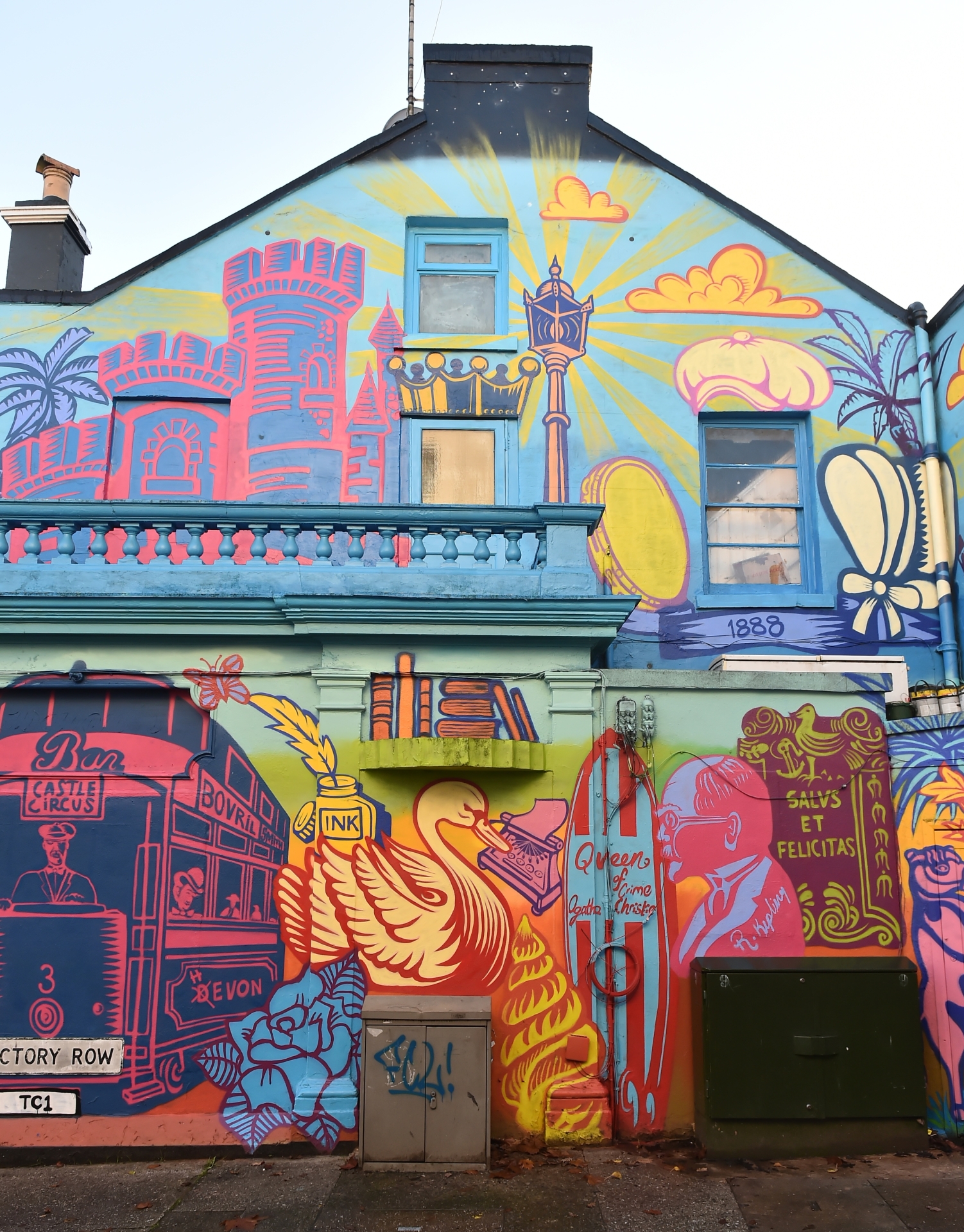
Appropriately the location of the mural is Torquay’s oldest purpose-built hostelry, the Castle Inn. Built in 1837 in what was then a rural location, the inn took its name from The Castle, a Victorian villa which had mock gothic style battlements and turrets; there never was a true medieval castle in Torquay. The mural incorporates this house, which still overlooks a busy crossroads that took the title of circus.
The other feature of Castle Circus was the Town Hall we know today. It dates from 1911, a time when the growing resort decided that it deserved a grand baroque municipal centre. Facing each other, the Town Hall and the Castle Inn remind us of Torquay’s best days. One promoting Britain’s richest town, a centre for the British Empire at leisure; the other offering the finest entertainment a twentieth century resort could offer.
Running through the images is the river Fleet. Long confined underground, Torquay’s river rises in Combe Pafford to flow south through a narrow limestone valley to conclude its journey at the harbour. Though mostly forgotten, this watercourse was the mother of modern Torquay.
Locals used the river as an analogy: about how we have lost connection with our past and old friends, about two sides not communicating, and of how so many things can rush past during our lives.
Torquay was a new type of community, a tourist resort but not just any tourist resort. It saw itself as the most exclusive of all Britain’s twenty-seven seaside towns and so it targeted the wealthiest and most prestigious of visitors.
Visitors often remarked on the resort’s pretensions and pictured is Rudyard Kipling who in 1896 critiqued its conservatism, “Torquay is such a place as I do desire to upset it by dancing through it with nothing on but my spectacles”.
Residents wanted the mural to illustrate the dual nature of Torquay, the resort’s wealth and poverty, and its contrasts in behaviour and outlook. Each having its own history, idiosyncrasies, likes, dislikes, challenges, and solutions. The differences between a Castle Circus and a Princess Pier Torquay; a Green Ginger and a Yacht Club Torquay; and a Saturday night and a Sunday morning Torquay.
To illustrate this variation, the mural takes the two symbols of the town, avian exemplars intertwined in Torquay’s history. Both offer popular understandings of the qualities of residents, embodying the spirit of the resort.
Swans mate for life and so represent loyalty, while in film, literature, music, and dance, the bird is used to suggest peace and tranquillity. A picture of elegance in motion but what is hidden from the eye is the frenetic activity beneath the surface. They make the sublime look effortless.
The other emblematic bird of Torquay is, needless to say, the seagull.
In 1892 Torquay was granted borough status by a Royal Charter, adopting the motto ‘Salus et Felicitas’ or ‘Health and Happiness’. In 1893 the resort acquired a coat-of-arms with a gull at its apex.
Seagulls are conspicuous opportunists and that has made them a symbol of persistence, intelligence, and resourcefulness. Their breeding and flocking habits further indicate a strong social connection, as well as the importance of togetherness and the importance of parenting. They define the term omnivore, consuming whatever they can find.
Both creatures are made for metaphors and are features of the mural.
Central in the mural is the adopted symbol of the resort, the Torquay palm. It is sometimes known as cabbage palm or New Zealand cabbage tree, although it isn’t actually a palm tree or anything to do with cabbage. As with so much about the English Riviera, we have collected bits and pieces from other places and made them our own.
That other side of Castle Circus comes to us from the many discussions had with the residents of the Leonard Stocks Centre. From experiences of homelessness and dependency on drink and drugs came the image of snakes and ladders and the Rubik’s Cube, symbolising life's challenges; of good times and bad; of triumphs and troubles.
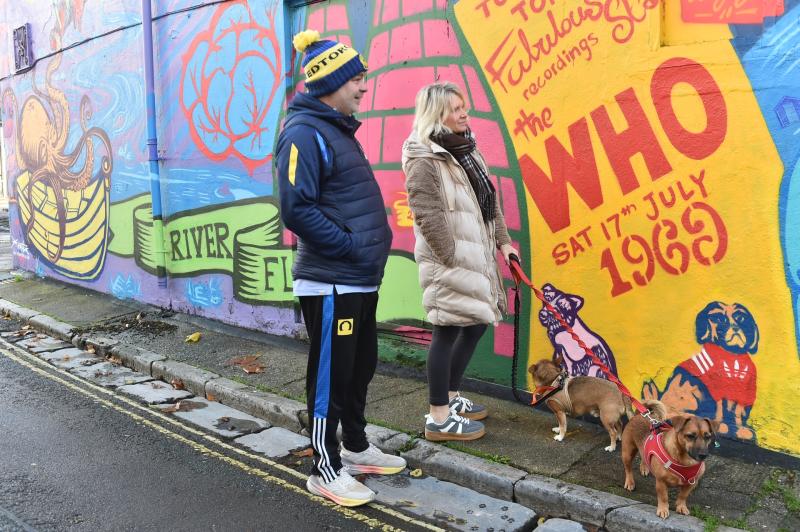
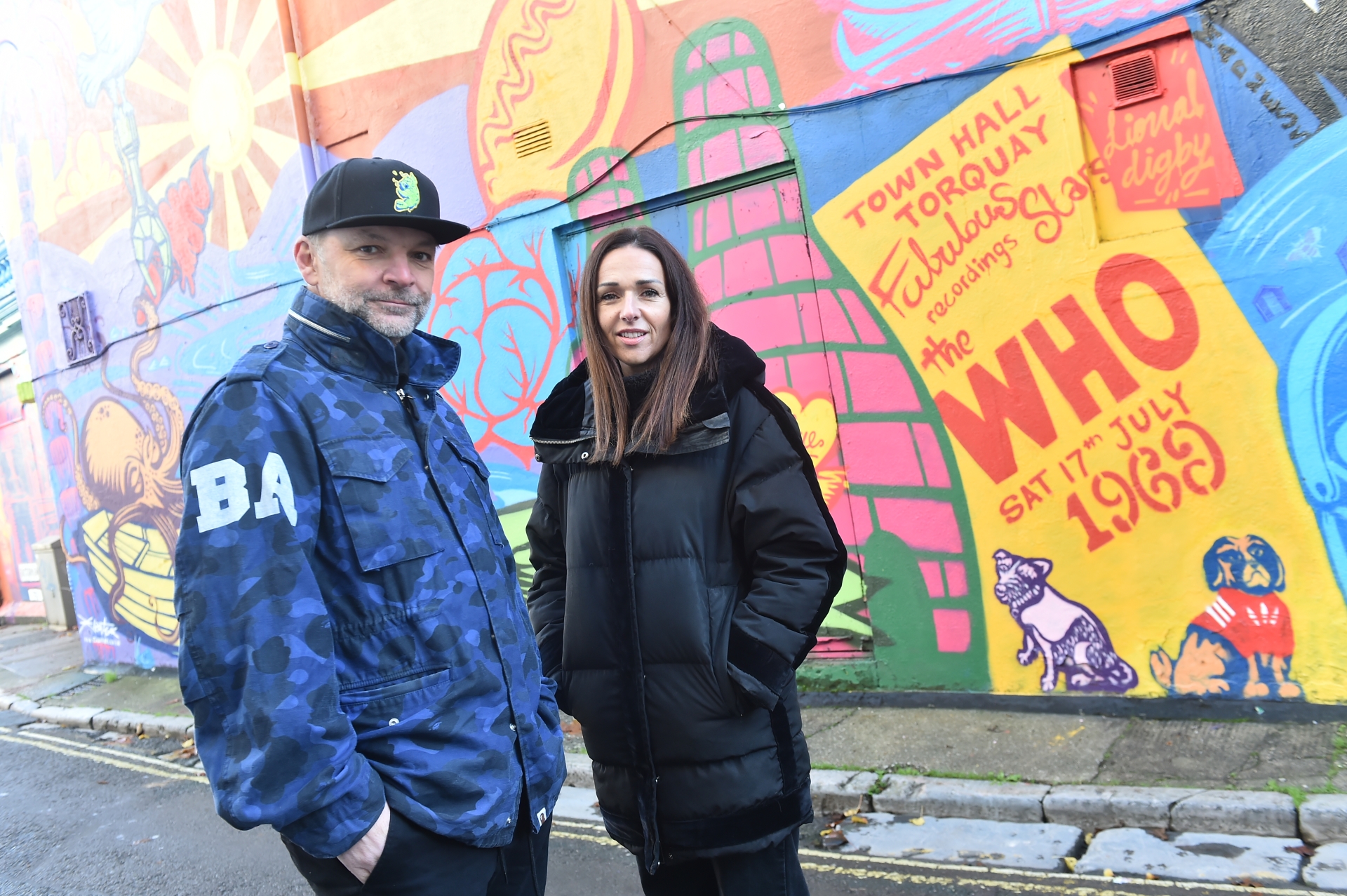
And we couldn’t forget the days when the Town Hall, the 400 and other clubs and pubs hosted local musicians and welcomed the nation’s great bands. There was only space for a very few but included are The Who, Suzi Quatro, Fleetwood Mac, Madness and UB40. All those events carried special memories for those who were there.
The mural reminds us that Torquay is more than the bright lights and the pleasure boats of the Strand. Inland, the town has its own history. Traces of working-class housing, pubs, clubs, factories and workshops are still there if we look hard enough.
 https://www.torbayweekly.co.uk/news/local-news/1974686/castle-circus-mural-tells-the-story-of-torquays-past-present-and-possible-future.html


